



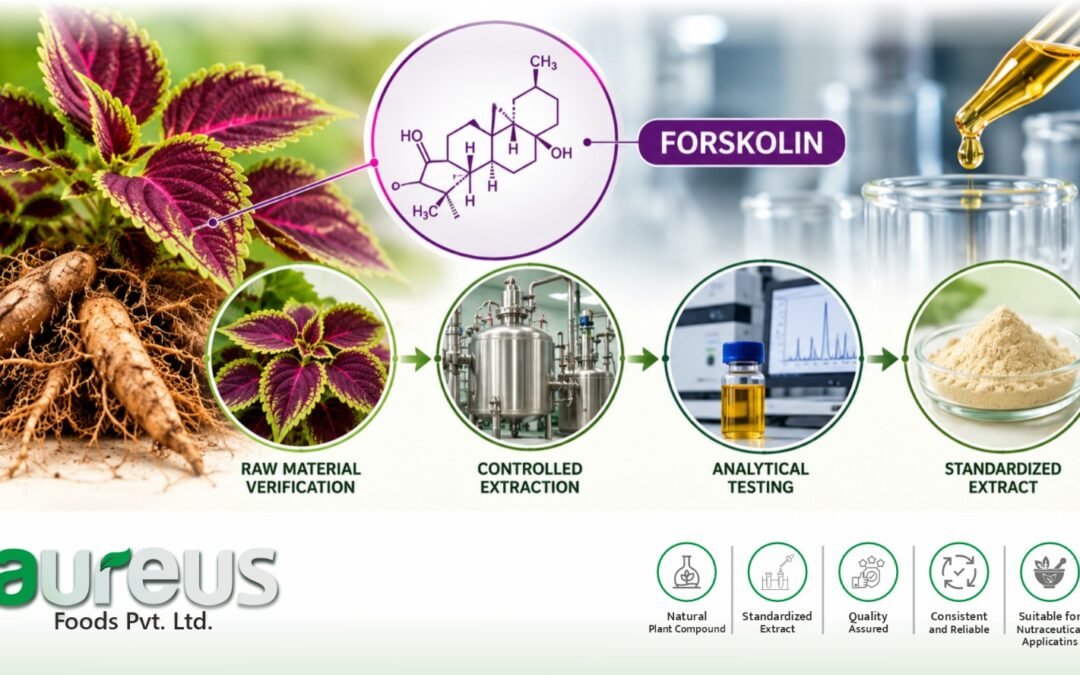
Coleus Forskohlii Extract is used as a botanical ingredient in nutraceutical, wellness, and formulation applications. However, the quality of an extract depends on more than simply identifying the plant source.
Standardization helps define the consistency and specification of a finished herbal extract. For manufacturers and B2B ingredient buyers, understanding standardization can make it easier to evaluate suppliers and select an extract that meets specific formulation requirements.
What Is Coleus Forskohlii Extract?
Coleus Forskohlii Extract is obtained from the roots of Coleus forskohlii, a botanical source associated with the naturally occurring compound forskolin.
Forskolin can be used as a marker when defining the specification of Coleus extracts. However, the specification of an extract can vary depending on raw material quality, extraction methods, processing conditions, and manufacturing controls.
Therefore, standardization is an important consideration when evaluating the quality and consistency of Coleus extract.
What Does Standardization Mean?
Standardization means controlling an herbal extract so that it meets a defined specification for a selected marker compound or quality parameter.
For Coleus Forskohlii Extract, the specification may be based on the declared forskolin content.
Instead of relying only on botanical identification, manufacturers can use analytical testing to determine whether the finished extract meets the agreed specification.
This provides a measurable quality reference for both manufacturers and ingredient buyers.
Why Is Standardization Important?
1. Helps Improve Batch-to-Batch Consistency
Botanical raw materials can naturally vary due to several factors, including cultivation conditions, plant maturity, geographical origin, harvesting, and storage.
Standardization provides a defined reference against which finished batches can be evaluated.
As a result, manufacturers can monitor whether batches remain within the required specification, while buyers can have clearer expectations about the ingredient they are sourcing.
2. Supports Formulation Requirements
Formulation teams often require ingredients with defined specifications.
A standardized Coleus extract provides a measurable level of the selected marker compound. This can help formulators evaluate whether the ingredient is suitable for their specific formulation requirements.
The appropriate specification will depend on the intended application and product design.
3. Makes Quality Verification More Measurable
Botanical identity and physical appearance alone do not provide complete information about an extract.
Analytical testing provides measurable data that can help verify marker content and other quality parameters.
For Coleus extracts, testing the forskolin content can therefore be an important part of quality verification.
4. Helps B2B Buyers Compare Ingredients
Ingredient buyers may encounter Coleus extracts with different specifications and standardization levels.
A clearly defined specification allows buyers to compare products using measurable parameters rather than relying only on product names or general descriptions.
Before sourcing, buyers should review the agreed specification, analytical results, and batch-specific Certificate of Analysis (COA).
5. Supports Quality-Controlled Manufacturing
Standardization should not be considered only as a final testing step.
A quality-focused manufacturing approach can include:
- Raw material verification
- Controlled extraction
- Process monitoring
- Marker-compound analysis
- Finished-product testing
- Batch documentation
- Traceability
Together, these practices help establish a more controlled and consistent manufacturing process.
Forskolin Content Is Only One Quality Parameter
Forskolin is an important marker associated with Coleus forskohlii extracts. However, the stated forskolin percentage alone does not provide a complete picture of ingredient quality.
When evaluating Coleus Forskohlii Extract, buyers should also consider:
- Botanical identity
- Plant part used
- Raw material quality
- Extraction process
- Analytical method
- Purity and specification
- Batch-to-batch consistency
- Manufacturing controls
- Certificate of Analysis
- Technical documentation
- Storage and stability information
Therefore, a standardized extract should be evaluated as a complete ingredient rather than based on a single specification.
How Manufacturers Maintain Standardization
Maintaining a defined specification requires control throughout the manufacturing process.
A quality-focused approach may begin with the selection and verification of suitable raw materials. This can be followed by controlled extraction, monitoring of processing conditions, and analytical testing of the finished extract.
Documentation also plays an important role.
Batch records, test results, product specifications, and traceability information help establish a documented quality history for each batch.
This approach allows manufacturers to monitor quality at different stages rather than depending only on final-product testing.
What Should Buyers Check Before Purchasing?
When sourcing Coleus Forskohlii Extract, B2B buyers should consider asking suppliers for the following information:
Botanical Information
Confirm the botanical name and plant part used in the extract.
Standardization Specification
Review the declared forskolin specification and applicable acceptance range.
Analytical Testing
Understand the analytical method used to determine the marker content.
Certificate of Analysis
Review the COA for the specific batch being supplied instead of relying only on a general product specification.
Raw Material Traceability
Ask how raw materials and finished batches are identified and documented.
Manufacturing Controls
Understand the process controls and quality checks applied during manufacturing.
Technical Documentation
Review relevant specifications, testing records, and other supporting quality documents.
Standardization at Aureus Foods
At Aureus Foods Pvt. Ltd., Coleus Extract manufacturing focuses on controlled processing, quality verification, and batch consistency.
Our approach considers raw material quality, controlled manufacturing processes, analytical testing, and batch-wise documentation.
For B2B ingredient buyers, these practices provide a clearer quality framework when evaluating Coleus Forskohlii Extract for different formulation requirements.
Conclusion
Standardization is an important part of Coleus Forskohlii Extract manufacturing because it provides a measurable reference for the quality and consistency of the finished ingredient.
However, standardization should not be evaluated in isolation.
Buyers should consider it alongside botanical identity, raw material quality, analytical testing, traceability, manufacturing controls, and batch documentation.
A clearly defined specification combined with controlled manufacturing and quality verification can provide a stronger foundation for reliable botanical ingredient sourcing.
For Coleus Extract and other standardized herbal ingredient requirements, connect with Aureus Foods Pvt. Ltd.